

Vitamin D Injection at Home in Dubai — DHA-Licensed, Same-Day Booking
Struggling with vitamin D deficiency? Skip the clinic queue — our DHA-licensed nurses administer a fast-acting Vitamin D3 injection at your home, office, or hotel anywhere in Dubai, with results-based dosing you can trust.
What Is a Vitamin D Injection?
A Vitamin D injection is a high-dose intramuscular shot of Vitamin D3 (cholecalciferol) that delivers the vitamin directly into your bloodstream — bypassing digestion entirely. Unlike oral supplements, which can take weeks to correct a deficiency, an injection restores your levels in a single visit, making it the fastest option for anyone with a confirmed low reading.
Benefits of Vitamin D Injection at Home
- Rapid correction of deficiency — one dose, no daily pill routine to remember
- Higher absorption than oral supplements, especially for those with gut or absorption issues
- Stronger bones and joints through better calcium regulation
- Improved immunity and energy levels
- Better mood and reduced fatigue, common symptoms of low Vitamin D
- Administered at home, so no clinic visit, no waiting room
Why is Vitamin D Deficiency Highly Prevalent in the UAE?
- Extreme Climate: High temperatures necessitate prolonged periods spent in temperature-controlled indoor environments, significantly reducing natural sun exposure.
- UV Protection Practices: The necessary, frequent use of high-SPF sunscreens and protective clothing effectively blocks the UVB rays required for vitamin D synthesis.
- Lifestyle Factors: Modern, sedentary, or office-based lifestyles often preclude the midday sun exposure required for adequate D3 production.
- Biological Factors: Variations in skin pigmentation (melanin) can further reduce the skin’s efficiency in synthesizing vitamin D from sunlight.
What are the symptoms of vitamin D deficiency?
Vitamin D deficiency can cause a wide range of symptoms, which vary based on levels of vitamin D.
The common symptoms of vitamin D deficiency include:
- Fatigue or low energy.
- Bone pain (hips, legs, lower back)
- Muscle weakness or cramps.
- Generalised weakness.
- Anxiety or depression or mood swings.
- Difficulty concentrating.
- Hair loss, dry skin.
- Frequent infections (cold, flu)
- Weight gain
- Joint pain.
- Difficulty to climb upstairs
- Slow wound healing.
What Are The Recommended Daily Intake for Vitamin D
The recommended daily intake for vitamin D is difficult to judge, as it is dependent on sun exposure. This varies from person to person according to where they live, tone of skin, and exposure to the sun.
The Food and Nutrition Board (FNB) recommends the following intake per day to maintain healthy levels of vitamin D:
- 0 to 12 months: 400 IU (international units)
- 1 year to 70 years: 600 IU
- 70 years and above: 800 IU
Who Can Benefit from a Vitamin D Test?
| Can Benefit | May Not Need Routine Testing |
|---|---|
| People with fatigue, muscle weakness, or bone pain | Healthy people with no symptoms or risk factors |
| Those with limited sun exposure | People with recently normal vitamin D levels |
| Older adults | Those already under regular medical monitoring |
| People with osteoporosis or fractures | People with adequate vitamin D intake and no concerns |
| Individuals with kidney, liver, or absorption disorders | Low-risk individuals without a doctor’s recommendation |
| Pregnant women (if advised) | People not yet due for follow-up testing |
What are the side effects of vitamin D?
Vitamin D is essential for maintaining bone health, immune function, and overall well-being. Vitamin D when taken in excess may lead to toxicity. The potential side effects may include:
Mild side effects (from supplements)
- Nausea or vomiting.
- Loss of appetite
- Dry mouth or altered taste.
- Fatigue and tiredness.
- Constipation or diarrhea.
- Headache or dizziness
Vitamin D toxicity (Hypervitaminosis D)
Vitamin D toxicity occurs when there is more vitamin D build up in body usually due to excessive intake of supplements, leading to high levels of calcium which can cause:
- Severe nausea or vomiting.
- Excessive thirst
- Frequent urination
- Muscle weakness and pain
- Confusion
- Renal stones
- Irregular heart rhythms
What Diagnostic Protocols Do We Use to Identify Deficiency?
A professional medical diagnosis is the prerequisite for injection therapy. At our clinic, we utilize the 25-hydroxy vitamin D serum test, the gold standard for measuring circulating vitamin D levels.
Clinical interpretations typically follow these standards:
- Optimal/Sufficient: Above 30 ng/mL.
- Insufficiency: 20–29 ng/mL.
- Deficiency: Below 20 ng/mL.
Before recommending an injection, our medical team evaluates your serum levels alongside calcium, phosphorus, and parathyroid hormone (PTH) levels to rule out secondary causes of deficiency.
Who Needs Intramuscular Vitamin D3 Injections?
Intramuscular Vitamin D3 injections may be recommended when oral supplements are ineffective or unsuitable, including:
- Malabsorption disorders: Such as celiac disease, Crohn’s disease, or ulcerative colitis.
- After bariatric surgery: Reduced absorption of fat-soluble vitamins following gastric bypass.
- Severe vitamin D deficiency: Especially when accompanied by bone pain, muscle weakness, or low bone density.
- Oral treatment failure: When high-dose oral vitamin D does not adequately increase vitamin D levels.

Oral vs. Injection Therapy: Which Approach is Better?
| Feature | Oral Supplements | Injection Therapy |
| Absorption Path | Gastrointestinal tract | Direct to systemic circulation |
| Bioavailability | Dependent on fat intake/gut health | Immediate & complete |
| Speed of Action | Gradual (weeks to months) | Rapid (days to weeks) |
| Best For | Maintenance/Mild deficiency | Severe deficiency/Malabsorption |
How is the Injection Administered Safely by Licensed Professionals?
Safety is paramount in the administration of high-dose vitamin D. Our clinical procedure includes:
- Clinical Assessment: Verification of current blood work and medical history by our licensed staff.
- Aseptic Technique: Preparation of the site using sterile, single-use equipment to eliminate infection risks.
- Intramuscular Delivery: Precise injection into the appropriate muscle tissue (typically the deltoid or gluteal region) to ensure slow, sustained release into the bloodstream.
- Post-Procedure Observation: Monitoring the patient for any immediate reactions and providing follow-up instructions.
Our Clinical Safety Protocols: A Commitment to Patient Care
At Medilife Healthcare, patient safety comes first. Every Vitamin D3 injection is provided under strict medical supervision and in line with Dubai Health Authority (DHA) standards.
- Blood Test Review – A recent 25-hydroxy vitamin D blood test is reviewed to confirm deficiency and determine the appropriate treatment.
- DHA-Licensed Nurses – All injections are administered by experienced DHA-licensed nurses using sterile, aseptic techniques.
- Personalized Dosing – Dosage is prescribed by our physician based on your vitamin D level, age, health status, and medical history.
- Post-Injection Monitoring – Patients are observed after the injection, receive aftercare advice, and have their treatment documented for follow-up.
- DHA-Compliant Care – We use single-use sterile equipment and follow all DHA infection control and biomedical waste disposal standards.
Real Patient Testimonials
★★★★★ Sarah M., Dubai (Sample testimonial)
“The nurse arrived on time, explained everything clearly, and the Vitamin D injection was quick and comfortable. The home service was convenient and professional.”
★★★★★ Ahmed R., Dubai (Sample testimonial)
“I had been feeling tired for months, and my doctor recommended a Vitamin D injection. Booking was easy, and the entire experience at home was smooth and reassuring.”
★★★★★ Emma L., Dubai (Sample testimonial)
“Excellent service from start to finish. The nurse was friendly, followed strict hygiene protocols, and I appreciated not having to travel to a clinic.”
Frequently asked Questions (FAQs)
Vitamin D3 also called cholecalciferol is an essential fat soluble vitamin that is required for various physiological functions in the body including maintaining bone health, immune function, hormonal balance and overall well being.
Essential vitamins are the vitamins that cannot be produced by the body in sufficient amounts and have to be obtained through diet or supplements to support physiological functions in the body.
Vitamin D also belongs to group of essential vitamins and is required for various important functions in the body, like maintaining bone strength , immune function, muscle strength, hormonal balance, and overall health.
The key functions of Vitamin B12 include:
- Absorption of calcium and phosphorous in the intestines thus helping to improve bone health.
- Prevents rickets in children and osteomalacia in adults.
- Reduces risk of osteoporosis in older adults.
- Reduces risk of fracturs
- Supports immune function
- Maintains metabolism
- Hormonal balance
- Supports mood and brain health.
Vitamin D can be administered in following:
- Individuals with severe deficiency with symptoms like bone pain, weakness, fatigue, altered mental status
- People who are unable to tolerate oral supplements.
- Individuals with severe bone disorders like rickets, osteomalacia or osteoporosis.
- Individuals with hyperparathyroidism or hypocalcemia.
- People with malabsorption disorders like celiac disease, ulcerative colitis, crohn’s disease etc.
- Individuals with limited or no sun exposure.
The benefits of D3 injection include:
- Faster absorption and relief of symptoms of like fatigue, weakness.
- Delivery of high dose and faster correction of deciency.
- Improved energy and reduced fatigue.
- Improves focus and concentration.
- Reduction in risk of fractures.
- Improved immune function.
- Improved metabolism
- Hormonal balance
Dosage is highly individual. It is determined by your current serum level (from your blood test), your age, body weight, and your overall medical history. A licensed physician must calculate this dose to ensure it is effective yet safe.
The vitamin B12 deficiency can be diagnosed by following tests.
- 25 Hydroxy vitamin D test (measures total vitamin D)
- 1,25 dihydroxy vitamin D test (measure active form of vitamin D)
Additional tests include:
- Serum Calcium levels
- Phosphorus test
- Parathyroid (PTH) hormone test
The foods rich in vitamin D include:
- Fatty fish: salmon, sardines, mackerel, tuna.
- Egg yolk
- Fortified diary products
- Cod liver oil
The cost of vitamin D3 injections varies based on the dosage required and number of sessions required to treat the deficiency.
While serum levels begin to rise within days, the clinical resolution of symptoms—such as fatigue, bone pain, or muscle weakness—often occurs within 2 to 4 weeks as the body replenishes its cellular stores.
Yes. Patients with existing hypercalcemia, severe kidney disease, or a history of specific vitamin D-sensitive health conditions should not receive high-dose injections. A thorough medical screening is required beforehand.
This is a common clinical finding known as “non-responder” status. This can be caused by underlying gut inflammation, malabsorption disorders, or genetic variations in how your body metabolizes Vitamin D. In these cases, injection bypasses the gut entirely, ensuring the nutrient reaches your bloodstream.
Vitamin D is essential during pregnancy for fetal bone development and maternal health. However, high-dose injections must be approached with caution and strictly under the supervision of your obstetrician. We always prioritize baseline blood tests to ensure the dosage is appropriate for both mother and child.
Yes. Clinical studies have shown a strong correlation between low levels of Vitamin D and hair shedding. Vitamin D plays a role in the stimulation of hair follicles. Correcting a deficiency can often improve hair strength and reduce excessive thinning over time.
In most cases, yes. However, it is vital that you provide our medical team with a complete list of all medications, supplements, and herbal products you are currently taking. This allows us to ensure there are no interactions and that your personalized treatment plan remains safe.
Nutritional requirements are dictated by various factors, including genetics, body mass index (BMI), age, and metabolic rate. Individuals with higher body fat may sequester more Vitamin D, requiring a more tailored dose to achieve optimal serum levels compared to those with lower body fat.
Excessive thirst and frequent urination can be symptoms of hypercalcemia (high blood calcium), which is a potential side effect of vitamin D toxicity. If you experience these symptoms following any form of vitamin D supplementation, you should seek medical advice immediately to have your serum calcium and vitamin D levels evaluated.
Medically Reviewed By:
Dr Mauada Siddiq
General Practitioner | DHA Licensed | DHA No : 88142075-001
This clinical resource has been prepared by the Medilife Healthcare medical team to provide evidence-based guidance on Vitamin D3 injection therapy. All content is peer-reviewed by our Lead Physician to ensure alignment with Dubai Health Authority (DHA) clinical safety standards. Last updated: July 15, 2026.
Our Clinical Commitment
At Medilife Healthcare, we operate under strict clinical governance. We do not provide elective injections without prior diagnostic validation. Our service follows a standardized patient safety protocol:
- Diagnostic Verification: We require current 25-hydroxy vitamin D blood test results to determine the precise therapeutic dosage.
- DHA Compliance: All administrative staff and nurses are DHA-licensed and trained in Aseptic Non-Touch Technique (ANTT).
- Safety Monitoring: We maintain a comprehensive record of all treatments to ensure patient safety and long-term metabolic health.
Data Transparency: Our clinical guidelines are sourced from international medical bodies, including the National Institutes of Health (NIH) Office of Dietary Supplements and the Endocrine Society’s Clinical Practice Guidelines.
Clinical Insight: Managing Severe Deficiency in a High-Demand Environment
Patient Profile: 34-year-old male, Dubai resident with an indoor, high-stress professional lifestyle.
Symptoms: Persistent fatigue, reduced gym performance, poor concentration, and lower back pain despite taking 2,000 IU oral Vitamin D3 daily for six months.
Assessment
|A home blood test measuring 25-hydroxy vitamin D confirmed a severe deficiency of 14 ng/mL (optimal levels are generally above 30 ng/mL).
Treatment
Following medical assessment, a physician-prescribed intramuscular Vitamin D3 injection was administered at home. A follow-up blood test was arranged four weeks later.
Outcome
- Vitamin D level increased from 14 ng/mL to 42 ng/mL.
- The patient reported improved energy, better focus, reduced lower back discomfort, and improved exercise performance within a few weeks.
Clinical Insight
This case demonstrates that some patients with significant Vitamin D deficiency may not achieve adequate improvement with oral supplements alone. When clinically indicated, intramuscular Vitamin D3 can be an effective treatment option under medical supervision, particularly when absorption or adherence may be limiting factors.
Note: This is an illustrative case study for educational purposes. Individual results vary, and Vitamin D treatment should always be guided by a qualified healthcare professional based on blood test results and clinical assessment.
The Physiology of Vitamin D3 (Cholecalciferol)
Vitamin D is a pro-hormone, not merely a vitamin. Unlike other essential nutrients, the body can synthesize Vitamin D3 (cholecalciferol) when the skin is exposed to ultraviolet B (UVB) radiation from sunlight. Once synthesized or ingested, it undergoes two hydroxylation steps in the body—first in the liver and then in the kidneys—to become the active hormone, calcitriol.
This active form regulates over 200 genes, playing a critical role in:
- Calcium and Phosphorus Metabolism: Facilitating intestinal absorption to maintain serum levels.
- Bone Mineralization: Preventing osteomalacia and rickets.
- Immunomodulation: Regulating the immune system’s response to pathogens.
- Neurological Health: Supporting brain function and mood stability.

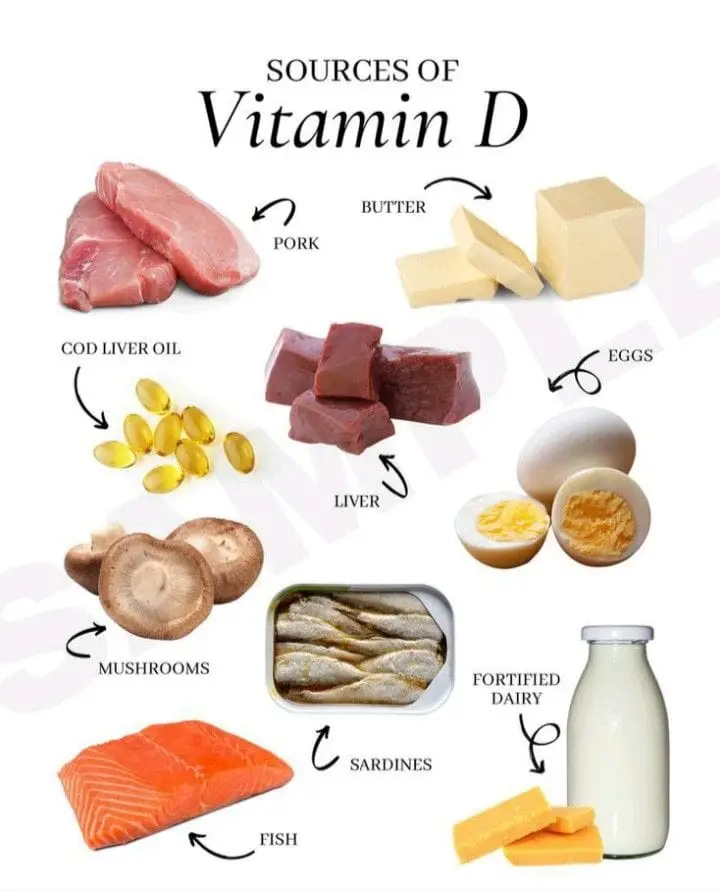
What Are The Dietary sources of Vitamin D
Although sunlight is the body’s primary source of vitamin D, certain foods can also help maintain healthy levels. However, it is often difficult to meet daily vitamin D requirements through diet alone.
Common dietary sources of vitamin D include:
- Oily fish such as salmon, mackerel, sardines, and tuna.
- Cod liver oil, which is naturally rich in vitamin D.
- Egg yolks, providing small amounts of vitamin D.
- Beef liver, which contains modest levels of the vitamin.
- Fortified dairy products, including milk, yogurt, and some cheeses.
- Fortified plant-based milks, such as soy, almond, and oat milk.
- Fortified breakfast cereals and orange juice.
- UV-exposed mushrooms, which are one of the few plant-based sources of vitamin D.
Need professional medical advice?
If you are experiencing symptoms of deficiency, do not self-diagnose. Our team is available 24/7 to facilitate blood testing and clinical consultation in the comfort of your home.
Book a Home Consultation