
Everything You Need to Know Before Booking
Answers to Our Most Frequently Asked Injection Questions
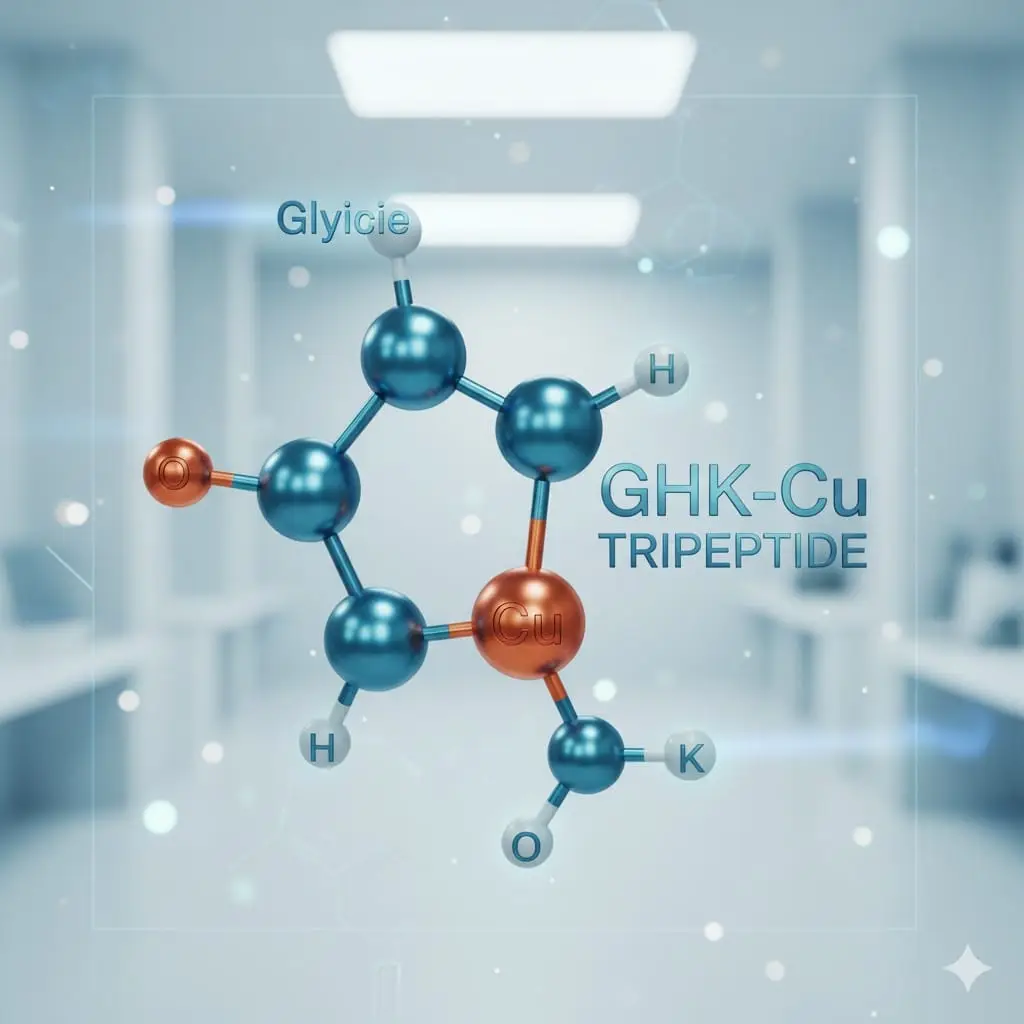
GHK-Cu is a copper-binding peptide made of three amino acids (Glycyl-L-Histidyl-L-Lysine) that acts as a cellular signaling molecule associated with collagen production and tissue repair. It’s administered at home in Dubai via injection following a physician consultation.
2. How does GHK-Cu differ from standard anti-aging creams? Topical creams work primarily at the skin’s surface, while injectable GHK-Cu is intended to bypass the skin barrier for more direct systemic absorption. Whether this produces meaningfully different results for your specific goals is best discussed with your physician.
Yes, when prescribed by a licensed physician and administered by a DHA-approved provider such as Medilife Global.
- GHK-Cu is studied for its association with improved skin elasticity, reduced appearance of fine lines, and support for skin recovery after procedures like laser treatment or microneedling.
Yes, GHK-Cu is used by both men and women, commonly for hair health, recovery support, and general anti-aging goals, following an individual health assessment.
GHK-Cu is studied for its potential role in supporting hair follicle health and blood flow to the scalp, and is sometimes used as an adjunct to other hair health treatments — your physician can advise whether it’s appropriate for your specific situation.
Some patients report changes in skin texture within 2–3 weeks, while more structural changes, such as those related to collagen remodeling or hair growth, typically take longer — often 3–6 months of consistent protocol, and results vary by individual
Standard regenerative protocols generally range from 100–200mcg per session, given 2–3 times weekly, while higher-dose protocols (up to 2mg) are reserved for specific recovery needs under closer medical supervision. Your physician determines your specific dosing.
Reported effects can include temporary redness at the injection site and mild, transient nausea. Copper overload is a rare but monitored risk, particularly with longer-term use, which is why periodic blood testing is part of ongoing care.
GHK-Cu’s anti-inflammatory and tissue-repair associations are why it’s sometimes included in recovery-focused protocols, though individual response varies and this should be discussed with your physician relative to your specific injury or condition.
Temperature control matters — unreconstituted (powder) peptides are typically stored frozen, while mixed (liquid) vials require refrigeration. Peptides should never be left in a car or in direct sunlight. Your care team will provide specific storage guidance for your prescribed protocol.
They work through different mechanisms — retinol increases skin cell turnover, while GHK-Cu is associated with repair-signaling and is generally non-irritating. Some physicians may recommend using both as part of a broader skincare and treatment plan.
Yes, it’s sometimes prescribed alongside peptides like BPC-157 or CJC-1295/Ipamorelin as part of a broader protocol, though this decision depends entirely on an individual health assessment by your physician.
Individuals with Wilson’s disease or other copper metabolism disorders, pregnant or breastfeeding women, and those with active malignancies or significant liver/kidney dysfunction should avoid this therapy. A baseline assessment is required for all patients before starting